Names and Numbers - A Counter Intelligence Measure and More
In the late 1930’s Japan’s Army General Staff created a set of counter intelligence measures. Armies, divisions, brigades and etc. became Heidan (Combat Group), Shudan (Group), Shitai (Detachment) or Butai (Unit), all vague designations avoiding any hint of unit composition or size. Further, the commander’s last name would identify his command (Kawaguchi Shitai, Ichiki Shitai, etc.), which later on created confusion in a number of ways.
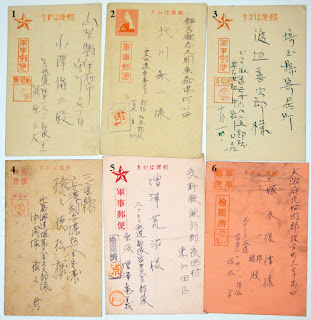
From inception in 1940 the new system, Tsūshōgō, was a vast improvement over the old. Also designed to obscure unit names, functions, locations and sizes in the field, it became as much a part of every army unit’s identity as its actual name. As the army mail system tracked locations for all deployed units, Tsūshōgō functioned as a mailing address for personnel in the field. It’s common to find a code name and number in place of a return address on a postcard home.
How it worked:
Code names were given to armies, divisions and brigades and numbers assigned to units. This is how the 2nd Division Headquarters looked in the dispatches: 勇1339; and its subordinate the 29th Infantry Regiment: 勇1303. (The 2ndDivision’s code name was 勇 ‘Isamu’, which means ‘Heroic, Brave’)
It took US intelligence services on average two months to uncover the identity behind a new code number, however, today Tsūshōgō survives in semi-retirement continuing to thwarting those who encounter it.
To go in-depth on Tsūshōgō see: The Imperial Japanese Army Volume 1, Chapter 4

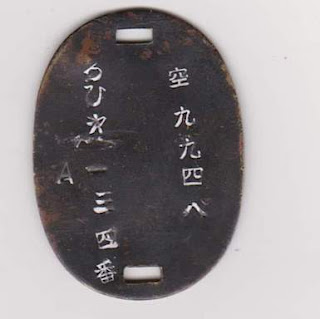
This army dog tag was one of several standard items displaying code names and numbers, although kanji code names were omitted from independent unit tags, as well as field made and some later war ones. Other items mentioned in the regulations were a soldier's personal service record booklet and military in and out bound mail, or pretty much anything with a unit's name on it that might fall into enemy hands.
© 2021 R.S.G.

Comments
Post a Comment